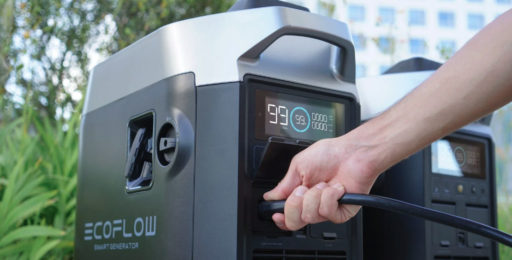
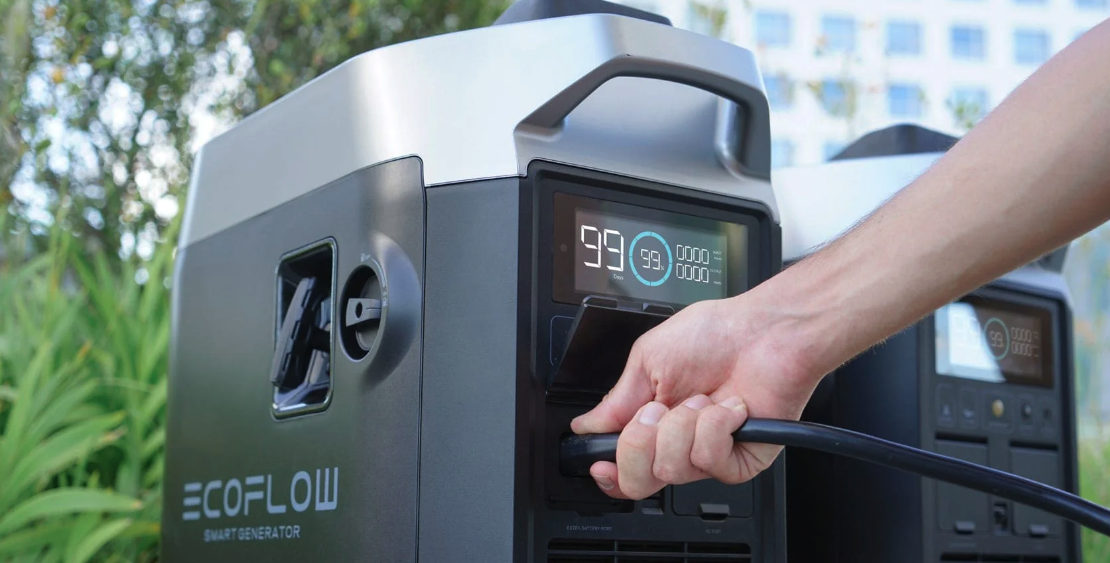
Portable generators are another way of keeping your devices and appliances powered up, no matter where you are. Let’s dive into the different types and help you find the best one for your situation.
What is a Portable Generator?
A portable generator is a power source you can easily move around and use anywhere, without needing to be connected to a permanent gas or electrical line. They’re perfect for camping, outdoor activities, and emergency situations.
Types of Portable Generators
- Inverter generators
- Solar generators
- Dual fuel generators
- Petrol generators

1. Inverter Generators (Produce clean, stable power, safe for electronics)
Best For: Campsites where you need peace and quiet.
- Quiet: Less noise.
- Efficient: Use less fuel.
- Clean Power: Safe for sensitive devices like phones and laptops.
Examples:
- EcoFlow DELTA 2 Max
- Honda EU22i
Pros:
- Clean, stable power.
- Fuel efficient.
- Compact and portable.
- Low noise.
Cons:
- Higher initial cost.
- Lower power output than gas generators.
2. Dual Fuel Generators (Generators that can run on both petrol and LPG.)
Best For: Emergencies and places where fuel availability is uncertain.
- Flexible: Use whichever fuel is available.
- Longer Runtime: Can switch fuels for extended use.
Examples:
- Champion 3400-Watt Dual Fuel
Pros:
- Flexible fuel options.
- Reduced emissions with propane.
- Extended runtime.
Cons:
- Bulkier and heavier.
- More expensive.
- Additional weight from LPG tanks.
3. Petrol-Powered Generators (Traditional generators that run on petrol)
Best For: Heavy-duty power needs and long-duration use.
- Powerful: Can handle big power needs.
- Reliable: Good for long-term use.
Examples:
- Briggs & Stratton P2200
- Generac GP3000i
Pros:
- High power output.
- Easily available petrol.
- Ideal for long outages.
Cons:
- Loud operation.
- Emissions are harmful to the environment.
- Requires regular maintenance.
4. Solar-Powered Generators (Generators that use solar panels to harness energy from the sun)
Best For: Eco-conscious campers and off-grid power.
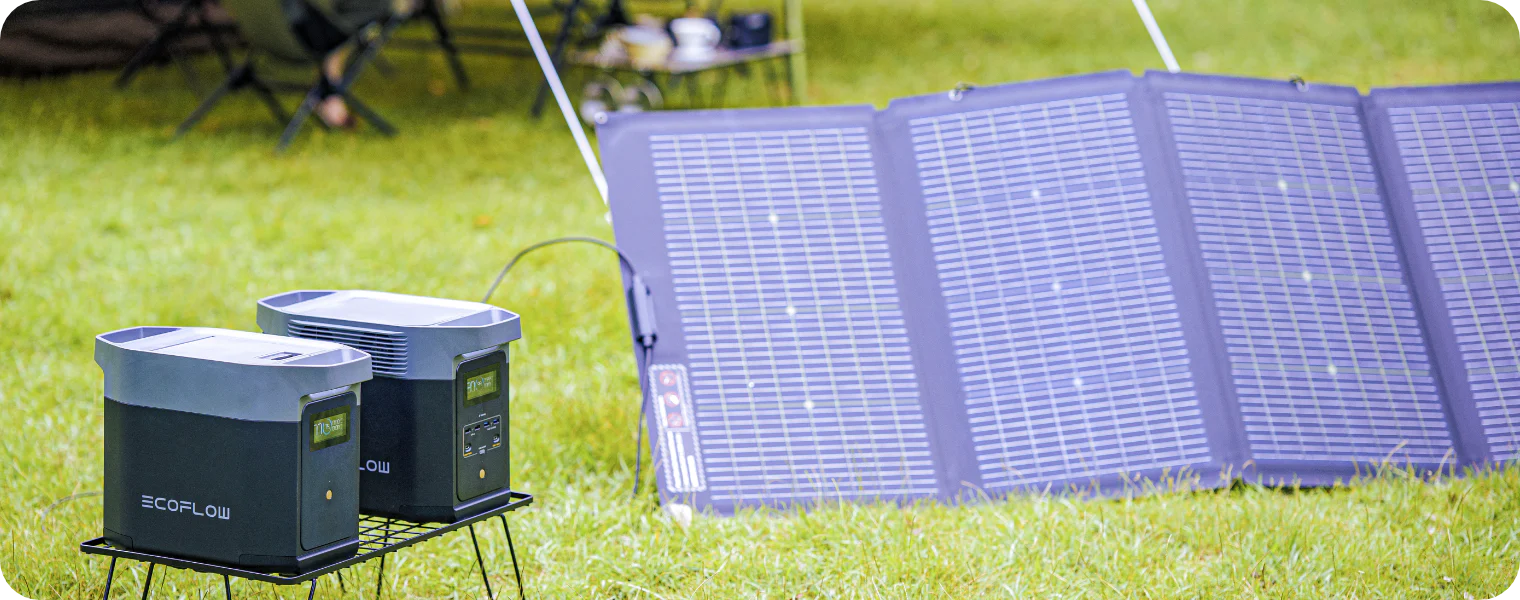
- Eco-Friendly: Uses renewable energy.
- Quiet: No noise.
- Safe: No fumes, perfect for indoor use.
Examples:
- EcoFlow RIVER 2 Pro Solar Generator (PV220W)
Pros:
- Environmentally friendly.
- Silent operation.
- Low maintenance.
- Great for remote locations.
Cons:
- Depends on sunlight.
- Limited power output.
- Higher initial cost due to solar panels.
How to Choose the Right Portable Generator
- Power Requirements: Calculate the wattage needed for your devices.
- Fuel Type: Choose based on availability and convenience.
- Portability: Consider weight and size if you need to move it often.
- Noise Level: Look for quieter models if noise is a concern.
- Budget: Set your budget and find the best value within it.
- Eco-Friendly: Opt for solar or dual-fuel if you want a cleaner option.
- Runtime: Check how long it can run on a single tank or charge.
FAQs About Portable Generators
Is it easy to set up a portable generator for camping?
Yes, setting up a portable generator for camping is quite easy. Most generators come with user-friendly manuals. For solar generators, you simply unfold the solar panels, connect them to the generator, and position them towards the sun. For petrol or dual-fuel generators, you fill the tank with fuel, start the engine, and plug in your devices.
How much power do I need for a camping trip?
The amount of power you need depends on the devices you plan to bring. For a typical camping trip, you might need power for lights, a fridge, a phone charger, and a small heater or fan. Calculate the total wattage of all your devices to determine the size of the generator you need. Read more here!
Can I use a portable generator indoors?
Petrol-powered generators should never be used indoors due to the risk of carbon monoxide poisoning. However, battery-powered portable power stations and solar generators can be safely used indoors as they produce no fumes.
What maintenance does a portable generator require?
Battery-powered portable generators require minimal maintenance. Just keep them charged and store them properly. Petrol-powered generators need regular oil changes, spark plug replacements, and fuel stabilizers if stored for long periods.
How long can a portable generator run continuously?
The runtime of a portable generator depends on its fuel capacity and load. For example, a petrol-powered generator might run for 8-12 hours on a full tank of fuel. Solar generators can run indefinitely as long as they receive adequate sunlight and aren’t heavily loaded.
Are portable generators noisy?
Inverter generators and solar-powered generators are usually much quieter than conventional gas-powered generators. Noise levels are measured in decibels (dB). For instance, inverter generators often run at 50-60 dB, while conventional generators can be as loud as 70-90 dB.
What is the lifespan of a portable generator?
The lifespan of a portable generator varies. Battery-powered models can last up to 10 years with proper care, while petrol-powered generators can last for several years with regular maintenance. The lifespan also depends on the frequency and intensity of use.