
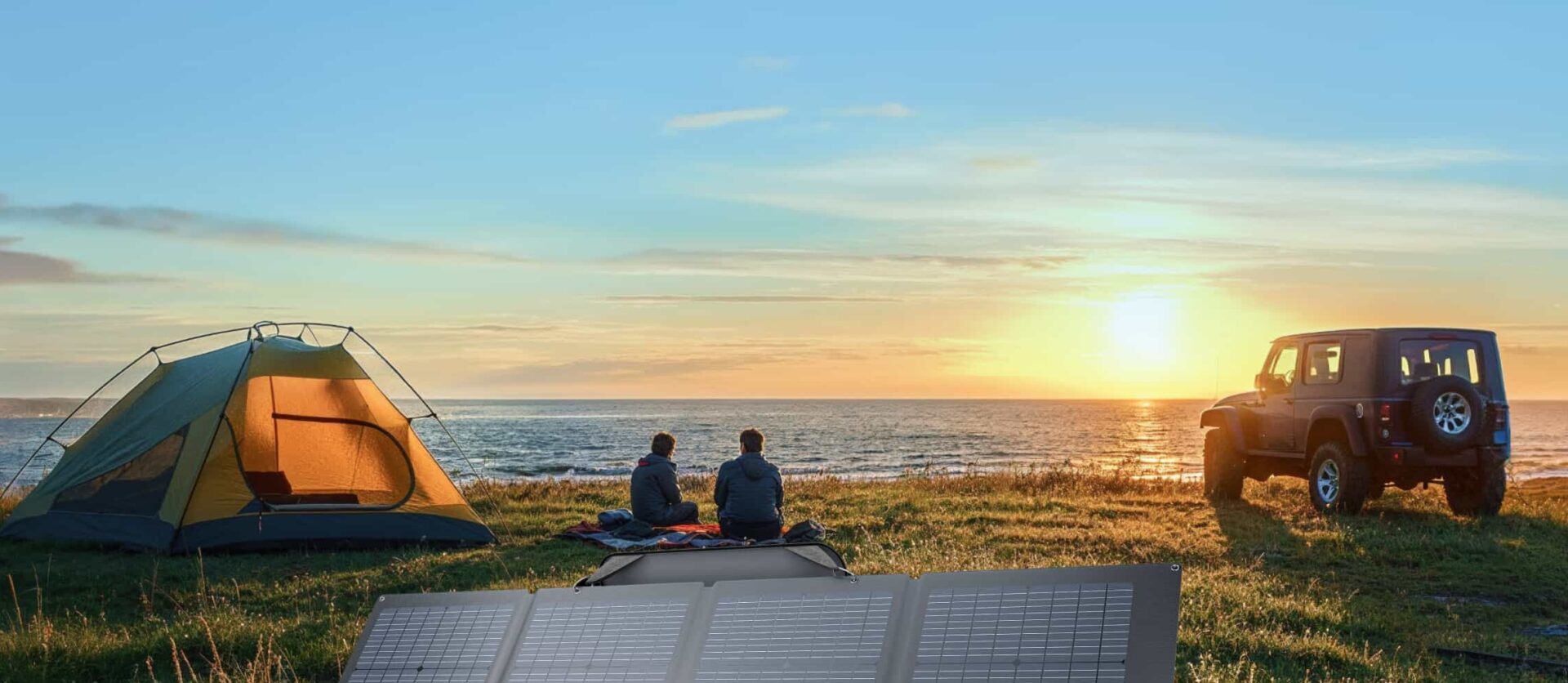
1. What is a portable power station?
A portable power station is a handy, rechargeable battery pack that you can take anywhere. It’s perfect for camping, road trips, and emergency power when the lights go out at home. Unlike traditional generators, these units are quiet, eco-friendly, and don’t rely on petrol. They come with various outlets, such as AC, DC, and USB ports, to power a wide range of devices and appliances.
2. How does a portable power station work?
Think of it as a giant power bank. You charge it up at home using a wall socket, in your car while you drive, or with solar panels if you’re off the grid. Once it’s charged, you can use it to run all sorts of devices. Inside, it has high-capacity lithium-ion batteries that store the electrical energy. These batteries then release the power through the outlets to keep your devices running.
3. Why should I use a portable power station for camping?
They’re quiet, eco-friendly, and super convenient. No more noisy, smelly generators – just plug in and power up your lights, cookers, and gadgets. Plus, they’re compact and easy to transport, making them ideal for remote locations. They also provide a clean source of energy, so you won’t have to worry about fumes or refuelling. It’s a hassle-free way to ensure you have all the comforts of home while enjoying the great outdoors.
4. How long does it take to charge a portable power station?
It varies on the size of your power station, but generally, it takes about 6-8 hours with a wall charger, 8-10 hours in the car, and 10-15 hours with solar panels. The exact time depends on the power station’s capacity and the efficiency of the charging method. Higher-capacity units might take longer to charge but offer more power storage. Using solar panels can be slower and depends on the amount of sunlight available.
5. How much power do I need for camping?
It depends on what you’re taking. Make a list of your gear and check their power needs. Add up the wattage of all your devices to figure out the total power requirement. Then pick a power station that can handle all your stuff without running out of juice too quickly. For instance, if you need to run a fridge, lights, and charge phones, you might need a power station with at least 500Wh capacity.
6. What can I power with a portable power station?
You can power lights, fans, portable fridges, phones, laptops, and even small kitchen gadgets like blenders or coffee makers. The versatility of portable power stations means you can keep your campsite illuminated, your food fresh, and your electronics charged. Just make sure to check the power station’s output capacity and compare it with your devices’ power requirements to ensure compatibility.
7. What’s the difference between a dual battery system and a portable power station?
A dual battery system is permanently installed in your vehicle, providing power directly from your car. It’s great for extended off-grid travel where you need a reliable power source for things like a fridge or other heavy-duty appliances. A portable power station is a standalone unit you can take anywhere. It’s more versatile for short trips or when you don’t want to modify your vehicle. Both systems have their advantages, so choose based on your specific needs. We’ve got an entire page on it here.
8. Is a portable power station better than a generator?
It depends on your needs. Portable power stations are quieter and cleaner, making them ideal for camping and areas where noise or fumes are a concern. They’re also easier to transport and don’t require fuel. However, they might not run large appliances for as long as a petrol generator can. Generators are better for heavy-duty power needs but are bulkier and noisier.
9. How do I charge my portable power station with solar panels?
Connect the solar panels to your power station using the provided cables. Make sure the panels are in direct sunlight for the fastest charging. It’s a great option for off-grid adventures, allowing you to harness renewable energy. Solar panels come in different sizes and efficiencies, so choose ones that match your power station’s input specifications. Keep the panels clean and properly angled to maximise sunlight exposure.
10. Can I use a portable power station while it’s charging?
Yes, most models allow you to use the power station while it’s being charged, but it might take longer to fully charge if you’re using it heavily. This feature is handy when you need continuous power for your devices. Just keep in mind that the charging speed will be slower if the power station is under load.
11. Are portable power stations safe?
Yes, they are designed with safety features like overcharge protection, short circuit protection, and temperature control. Always follow the manufacturer’s instructions and use the recommended chargers to ensure safe operation. Avoid using damaged cables or connectors, and don’t try to open or repair the power station yourself.
12. What’s the lifespan of a portable power station?
The lifespan varies depending on the quality of the unit and how well it’s maintained. Generally, you can expect a good portable power station to last for several years with proper care. The battery life is often measured in charge cycles. For Lithium Iron Phosphate (LiFePO4 or LFP) battery types, you’ll get anywhere from 2,000 – 3,000 cycles before the battery capacity starts to degrade.
13. Can I take a portable power station on a plane?
Portable power stations with batteries over 100Wh are generally not allowed in checked luggage or carry-on bags due to airline regulations. Always check with your airline for specific rules regarding lithium-ion batteries before travelling. For smaller power banks, ensure they comply with airline regulations and are packed properly.
14. How do I choose the right portable power station?
Consider the devices you’ll need to power, the total wattage, and the duration of use. Look for a power station with the right capacity, output options, and portability features. Reading reviews and comparing different models can also help you make an informed decision. Additionally, think about charging options like solar compatibility if you plan to be off-grid for extended periods.
15. What’s the difference between watts, watt-hours, and amps?
Watts (W) measures the rate of energy consumption. Watt-hours (Wh) indicate the total energy consumed over time, useful for understanding a power station’s capacity. Amps (A) measure the current flow. Knowing these terms helps you better understand your power needs and the capabilities of your portable power station. Check out our page on understanding power needs, or our glossary page for more info.