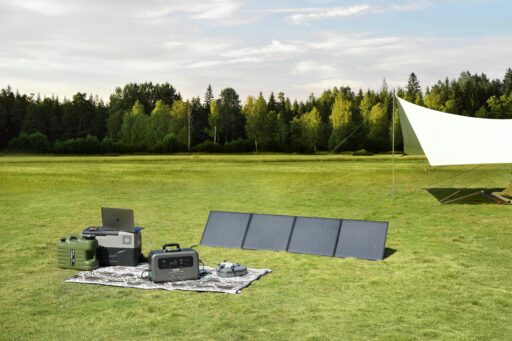
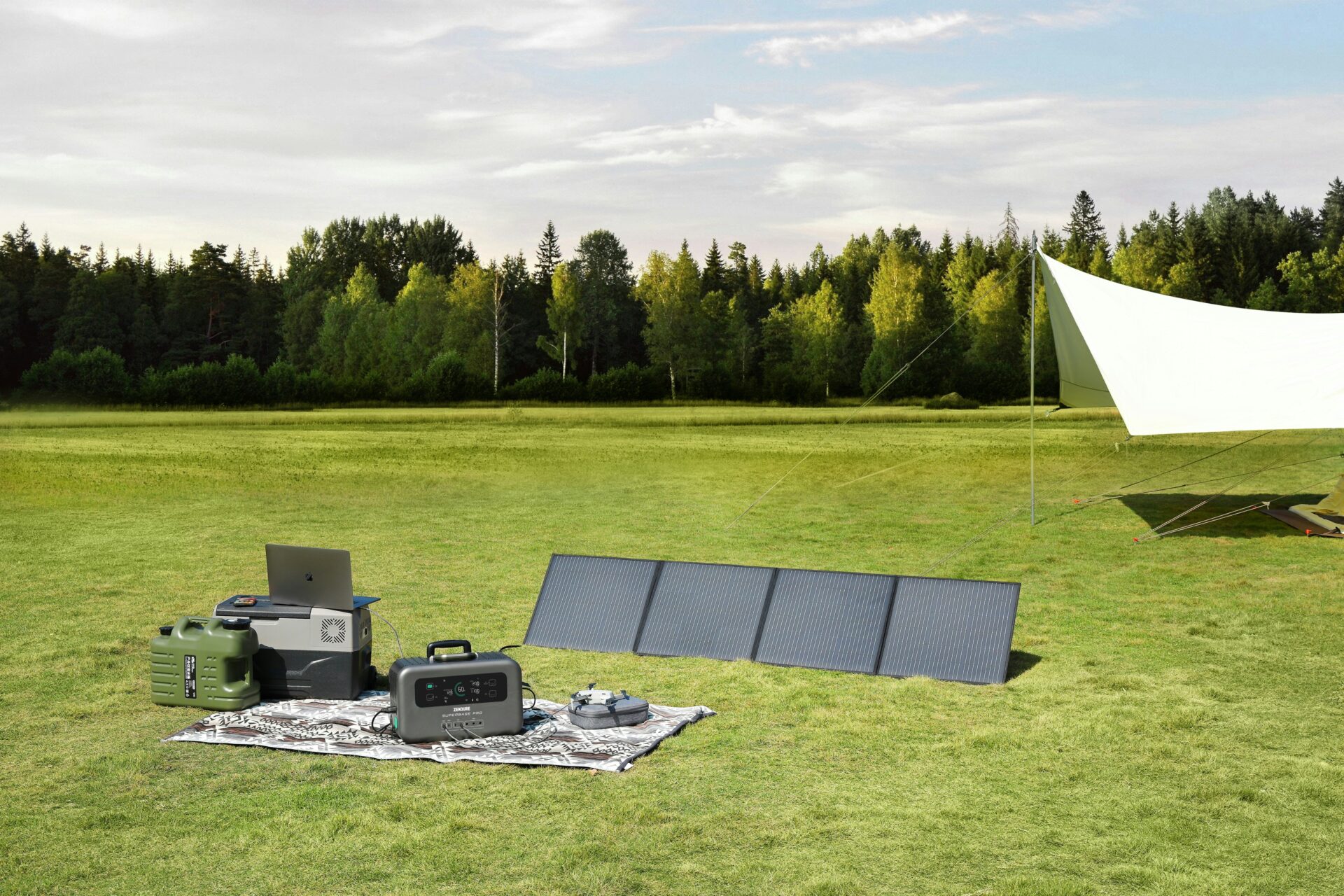
Solar panels are one of the best ways to kep your camping gear powered up while you enjoy the great outdoors. This guide will help you understand how solar panels work and how to choose the right one for your camping needs.
Why Use Solar Panels for Camping?
- Eco-Friendly: Solar panels use renewable energy from the sun, reducing your carbon footprint.
- Convenient: Provides a reliable power source without the need for fuel or electrical hookups.
- Cost-Effective: After the initial investment, solar energy is free.
How Solar Panels Work
Solar panels convert sunlight into electricity using photovoltaic (PV) cells. This electricity can then be used to charge batteries, power devices directly, or run through an inverter to produce AC power for larger appliances.
Types of Solar Panels
1. Monocrystalline Solar Panels
- Efficiency: High efficiency and long lifespan.
- Size: More compact for the same power output.
- Cost: Typically more expensive.
- Best For: Limited space and high power needs.
2. Polycrystalline Solar Panels
- Efficiency: Slightly lower efficiency than monocrystalline.
- Size: Larger for the same power output.
- Cost: Generally more affordable.
- Best For: Larger setups where space is not an issue.
3. Flexible Solar Panels
- Efficiency: Similar efficiency to rigid panels but slightly less durable.
- Weight: Lightweight and flexible.
- Cost: Can be more expensive due to advanced materials.
- Best For: Curved surfaces or portable setups.
How to Determine Your Solar Power Needs
Calculate Your Daily Power Consumption
- Make a List: List all the devices you plan to use and their power consumption in watts.
- Estimate Usage: Estimate how many hours each device will be used per day.
- Calculate Total Watt-Hours: Multiply the wattage of each device by the hours of use to get the total daily watt-hours (Wh).
Determine the Solar Panel Output Needed
- Total Daily Watt-Hours: Add up the watt-hours for all your devices.
- Panel Efficiency: Consider the efficiency of the solar panel (usually 75-80% of the rated power due to weather conditions and panel angle).
- Calculate Required Wattage: Divide the total daily watt-hours by the number of sunlight hours per day to find the required wattage.
Example Calculation – Overnight Camping Trip
Step 1: Calculate Daily Power Consumption
First, we need to know how much power you need each day. This is done by adding up the watt-hours (Wh) for all the devices you plan to use. In this example:
- Phone Charger: 10W for 2 hours = 20 Wh
- LED Lights: 5W for 5 hours = 25 Wh
- Portable Fridge: 50W for 24 hours = 1200 Wh
- Fan: 10W for 8 hours = 80 Wh
Total Daily Consumption: 1325 Wh
Read more: Understanding Your Power Needs
Step 2: Determine Required Solar Panel Wattage
Next, we need to figure out how powerful your solar panel needs to be to generate this amount of energy in a day. This depends on how many hours of sunlight you get each day. Let’s assume you get an average of 5 hours of good sunlight per day.
1. Calculate Raw Solar Panel Wattage:
- You need 1325 Wh of energy per day.
- You have 5 hours of sunlight each day to generate this energy.
So, you divide the total energy needed by the hours of sunlight:
1325 Wh / 5 hours = 265W
This means, ideally, you need a solar panel that can produce 265 watts per hour.
Step 3: Adjust for Efficiency
Solar panels are not 100% efficient. Factors like angle, shading, and weather can reduce their efficiency. A common efficiency factor to use is about 80% (or 0.8).
- The raw calculation gave us 265W.
- Since panels typically operate at around 80% efficiency, we need to account for this.
You adjust the required wattage by dividing by the efficiency factor:
265W / 0.8 = 331.25W
Final Result
Therefore, to meet your daily power needs of 1325 Wh with an average of 5 hours of sunlight per day, considering an efficiency of 80%, you need:
A solar panel setup that can provide around 330W of power.
Our Product Recommendations
To meet a daily power need of around 330W, you can use a combination of solar panels that add up to this wattage. Here are some products available in the Australian market that would be suitable:
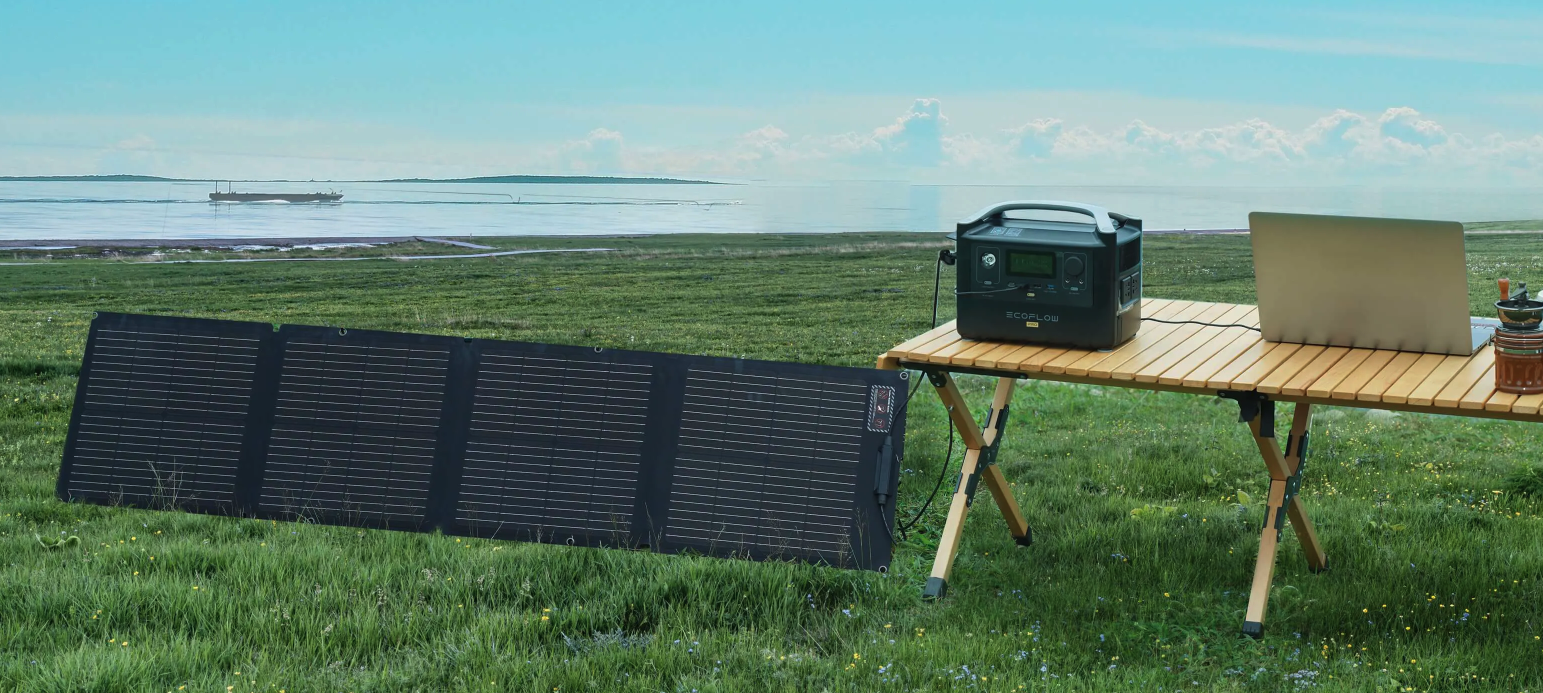
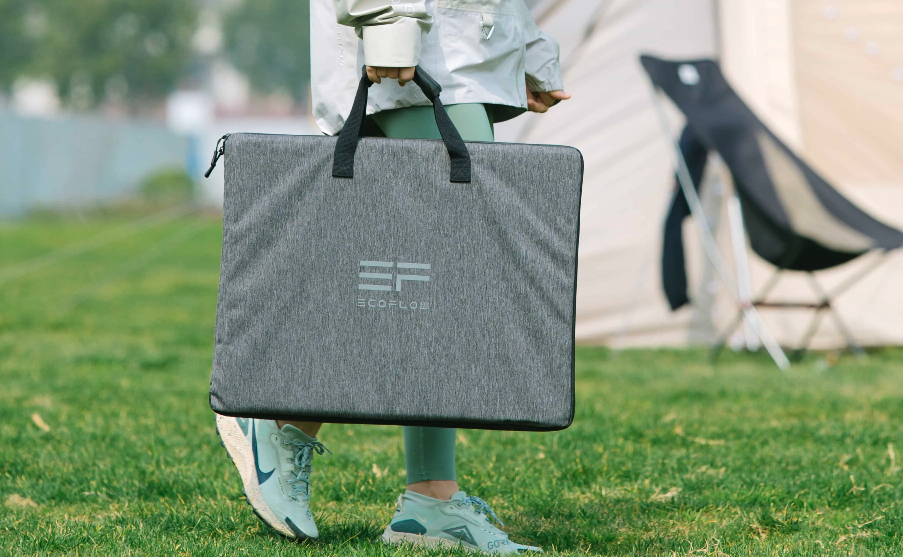
1. EcoFlow 110W Portable Solar Panel
- Portable and lightweight, designed for easy transport.
- High efficiency, suitable for camping and outdoor activities.
- You would need three of these panels to meet the 330W requirement (110W x 3 = 330W).
2. Renogy 100W 12V Monocrystalline Solar Panel
- High efficiency and durable construction.
- Suitable for both portable and fixed installations.
- You would need four of these panels to reach 400W, which is more than enough to cover 330W, and it provides a buffer (100W x 4 = 400W).
3. Jackery SolarSaga 100W Solar Panel
- Foldable and easy to carry.
- Designed to work seamlessly with Jackery power stations.
- Available on Jackery’s Australian website and through outdoor gear retailers.
- Similar to the Renogy panels, you would need four of these to meet your power needs (100W x 4 = 400W).
4. Kings 200W Solar Blanket
- Compact and foldable, perfect for camping
- High output for its size, very portable.
- You would need two of these blankets to meet your power requirements (200W x 2 = 400W).
Choosing the Right Solar Panel Setup
Portable vs. Fixed Panels
- Portable Panels: Lightweight and easy to move, ideal for short trips or minimal setups – like tent camping.
- Fixed Panels: Mounted on your RV, camper, or stationary setup – better for long-term use
Panel Size and Weight
- Consider the space you have available and how much weight you can handle.
- Larger panels may offer more power but can be harder to transport.
Compatibility
- Ensure your solar panel is compatible with your battery or power station.
- Check for the correct voltage and connectors.
Durability
- Look for panels that are weather-resistant and durable, especially if you’ll be using them in harsh conditions.
Solar Panel FAQs
Can you mix and match power station brands with different solar panel brands?
Absolutely! You can mix and match different brands of power stations and solar panels. Just make sure they are compatible. Check the voltage and connector types. Many power stations come with adapters that make it easy to connect various solar panels. Always check the manufacturer’s guidelines to ensure everything works smoothly.
Is it easy to set up solar panels for camping?
Yes, setting up solar panels for camping is quite simple and user-friendly. Most portable solar panels come with easy-to-follow instructions and all the necessary connectors. Here’s a basic rundown:
- Unfold your solar panel and place it in direct sunlight.
- Connect the panel to your power station or battery using the provided cables.
- Adjust the angle of the panel to get the best sunlight exposure.
- Keep an eye on the charging process via the power station’s display or an app.
How long does it take to charge a power station with solar panels?
The charging time depends on your power station’s capacity and the wattage of your solar panels. Here’s a general idea:
- Small power stations (200-500Wh): Typically 4-8 hours with a 100W solar panel.
- Medium power stations (500-1000Wh): Usually 6-12 hours with 200W solar panels.
- Large power stations (1000-2000Wh): Can take 10-20 hours with 300W-400W solar panels. These times can vary based on how sunny it is and the efficiency of your panels.
- How much energy output do solar panels provide?
The energy output of solar panels is measured in watt-hours (Wh). Here’s how it works:
- 100W solar panel: Produces approximately 300-600Wh per day, depending on sunlight conditions.
- 200W solar panel: Produces approximately 600-1200Wh per day.
- 300W solar panel: Produces approximately 900-1800Wh per day. Remember, the output can vary based on panel efficiency, weather, and where you are.
Do solar panels work on cloudy days?
Yes, they do! Solar panels still work on cloudy days, but they’re not as efficient. On a cloudy day, they might produce around 10-25% of their rated capacity. It’s a good idea to have a larger capacity power station or extra panels to make up for less sunny weather.
What maintenance do solar panels require?
Solar panels are pretty low-maintenance. Here are some easy tips:
- Cleaning: Wipe them down with a soft cloth and water to remove dust and debris.
- Inspecting: Check regularly for any signs of damage or loose connections.
- Storing: When not in use, store your panels in a safe, dry place to avoid damage.
Can solar panels overcharge a battery?
Most modern solar panels and power stations have built-in charge controllers that prevent overcharging. These controllers regulate the voltage and current going to the battery, keeping everything safe and efficient.
What size solar panel do I need for my camping setup?
The size depends on what you plan to power. Here’s a quick guide:
- Light use (phones, small devices): 50-100W panel.
- Moderate use (small fridge, lights): 100-200W panel.
- Heavy use (large fridge, multiple devices): 200-400W panel.